Unplanned failures of conveyor belts and other material handling equipment can bring production to a standstill, disrupt delivery schedules, and result in costly downtime. The good news is that these systems rarely fail without warning. By recognizing early warning signs, you can take proactive steps to protect your operations, extend equipment life, and avoid expensive repairs.
Early signs of conveyor system failure
Here are five early signs your conveyor belt may be headed for failure:
- Unusual vibrations or movement
A healthy conveyor system operates with a steady and predictable rhythm. If you notice sudden or increasing vibrations, side to side belt movement, or even bouncing, these are strong indicators of stretching, uneven wear, or misaligned pulleys. Any deviation from typical vibration patterns warrants investigation.
- Sudden temperature spikes and hot spots
Excess heat almost always signals friction or a mechanical issue. If parts of your conveyor such as drive pulleys, bearings, or idlers run hotter than usual, issues like bearing deterioration, belt slippage, or lack of lubrication may be developing. Acting early on temperature anomalies can save costly repairs down the line.
- Irregular speed or performance changes
Consistent conveyor speed ensures smooth production flow. Unexpected dips, fluctuations, or sudden shifts in speed often point to motor issues, belt slippage, or component wear. Gradual slowdowns or speed changes under varying loads also hint at developing capacity problems.
- Unusual noises
Your conveyor is not likely to fail silently. Listen for high pitched squeals, which can indicate misalignment or slippage, grinding sounds which may reveal bearing wear or debris, or rhythmic thumping that might point to damaged belt sections. These audio clues often appear before you can spot any obvious damage.
- Unexplained increases in power usage
If your motors start drawing more current or there is an unexplained rise in your plant’s energy consumption, developing mechanical resistance or electrical issues could be to blame. These warning signs are easy to miss but can provide an invaluable early alert.
improvement.
How predictive maintenance can help
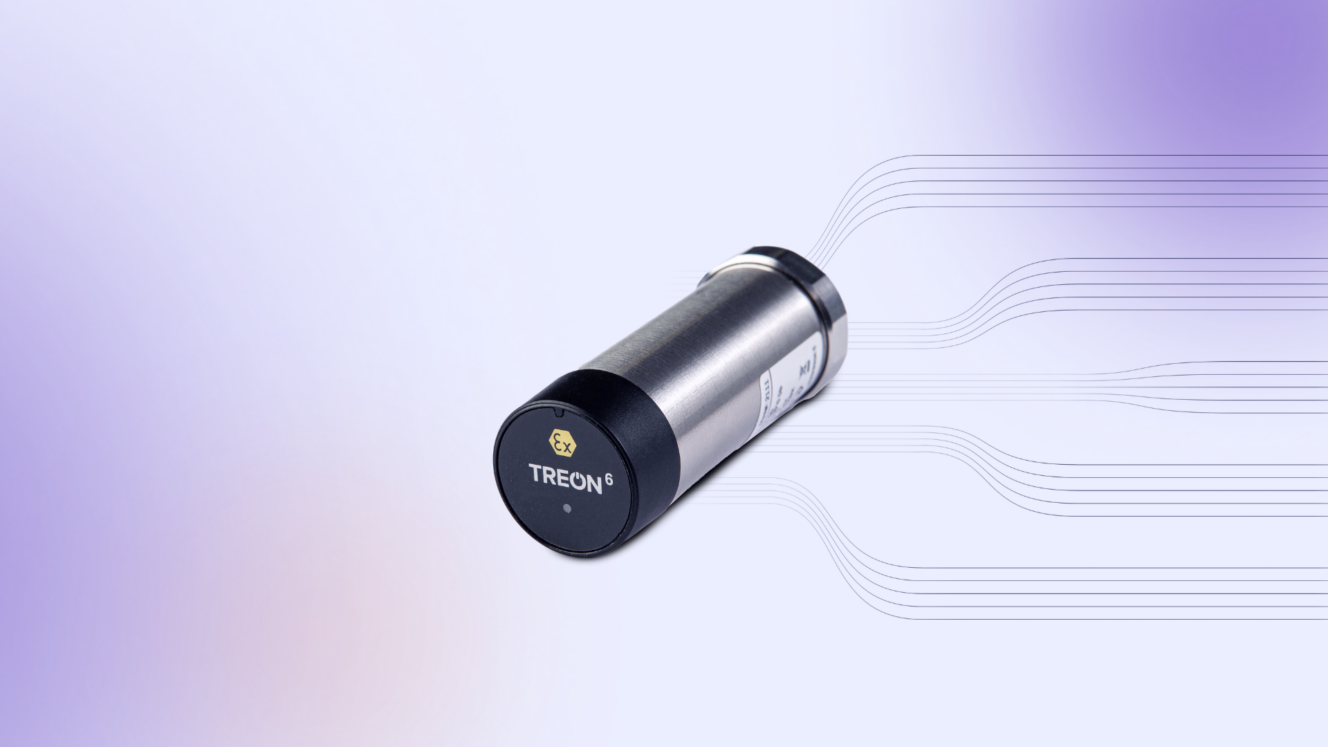
Modern predictive maintenance offers a comprehensive solution that brings together sensors, software, machine learning, and artificial intelligence to give you a clear, actionable view of your conveyor systems’ health. Wireless sensors, like Treon Industrial Node C, continuously monitor vibration and temperature, capturing real-time data that serves as the foundation for powerful analytics.
Treon Flow brings all critical condition data together in one intuitive platform enabling you to visualize sensor data through clear trend charts and identify anomalies early by tracking equipment behaviour over time. With AI-driven predictions, maintenance teams can move confidently from reactive fixes to proactive, data-led maintenance.
The platform offers advanced features such as customisable thresholds, event annotations, and historical trend review, enabling a deeper understanding of when and why deviations occur. Smart alert management ensures potential issues are flagged promptly, while adaptive AI continuously refines detection accuracy and minimises false alarms.
With integrated sensors, AI-powered analytics, and collaborative tools, Treon Flow gives you a complete, predictive maintenance ecosystem — helping you prevent costly breakdowns, extend equipment life, and maintain smooth, uninterrupted operations.